Reading the numbers
The title sounds simple, but the work behind it usually is not, because metrics has a way of making small jobs feel larger than they should. What matters here is how TermiShell handles CPU and memory checks, and whether it does so without turning a short task into a long phone session. That sounds obvious until you try doing it from a phone while you are away from your desk, with one eye on the clock and the other on the server state. A lot of tools get noisy at that point, and once the app starts asking for attention, the task itself starts to drift. TermiShell works better when it stays quiet, keeps the shape of the job intact, and lets you move without thinking about the interface too much. That restraint is what makes the rest of the article worth talking about.
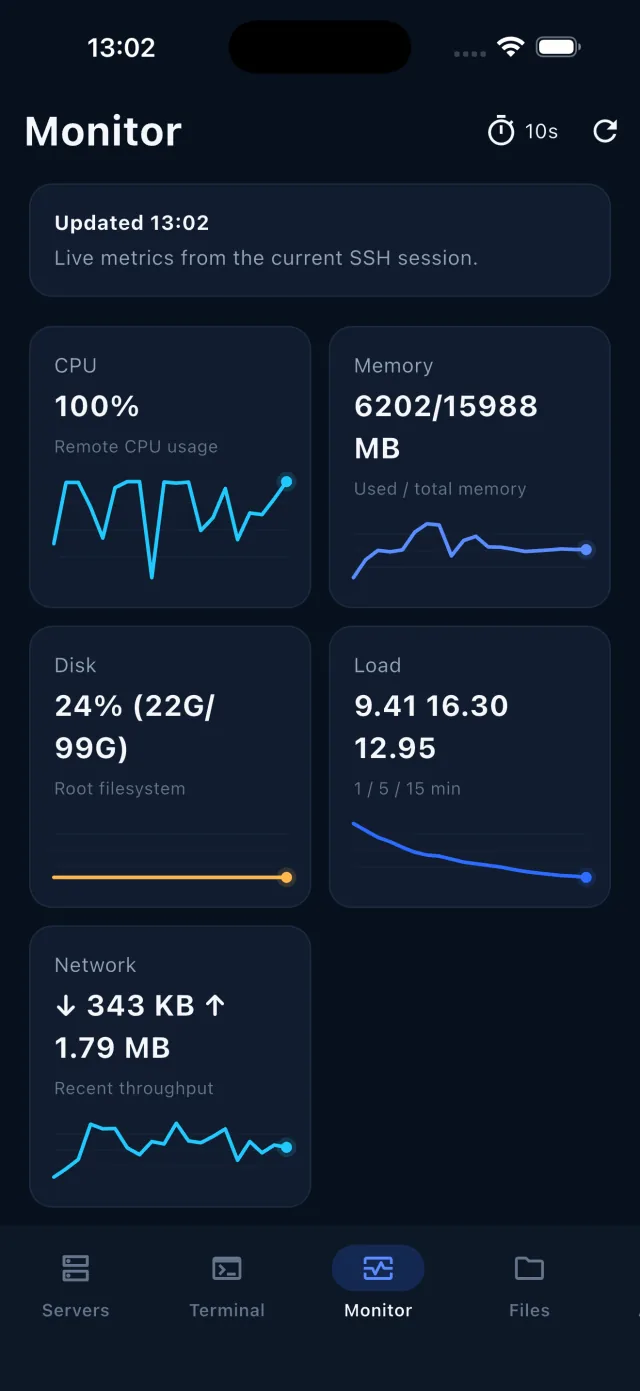
Picture the usual moment: you are away from your desk, but you still need to deal with disk usage before the day moves on. You do not want a clever flow or a tour of menus. You want the session open, the state readable, and the next action close enough that you do not lose the thread between meetings. That is the part most mobile tools miss when they are trying too hard to look complete, because they start padding the route instead of shortening it, even when the answer is already right in front of them through the metric cards. TermiShell feels more useful when it resists that temptation and gives you the plain route first. That is the kind of detail I notice fast, and I usually remember it longer than the feature list.
What the metrics tell you
With the little charts, the small things matter more than the big slogans, and this is where the app either earns trust or burns it. A readable list, a session that stays where you left it, and a path that does not split into three extra screens are already doing real work. If the title leans toward system state, those details are the difference between a quick check and a long argument with the interface, especially when the task starts with process lists. I would rather have a tool that gets that part right than one that looks impressive in a screenshot and falls apart after a minute of use. That preference sounds boring, which is probably why it is the right one for most days. The more ordinary the job, the less patience I have for decoration.
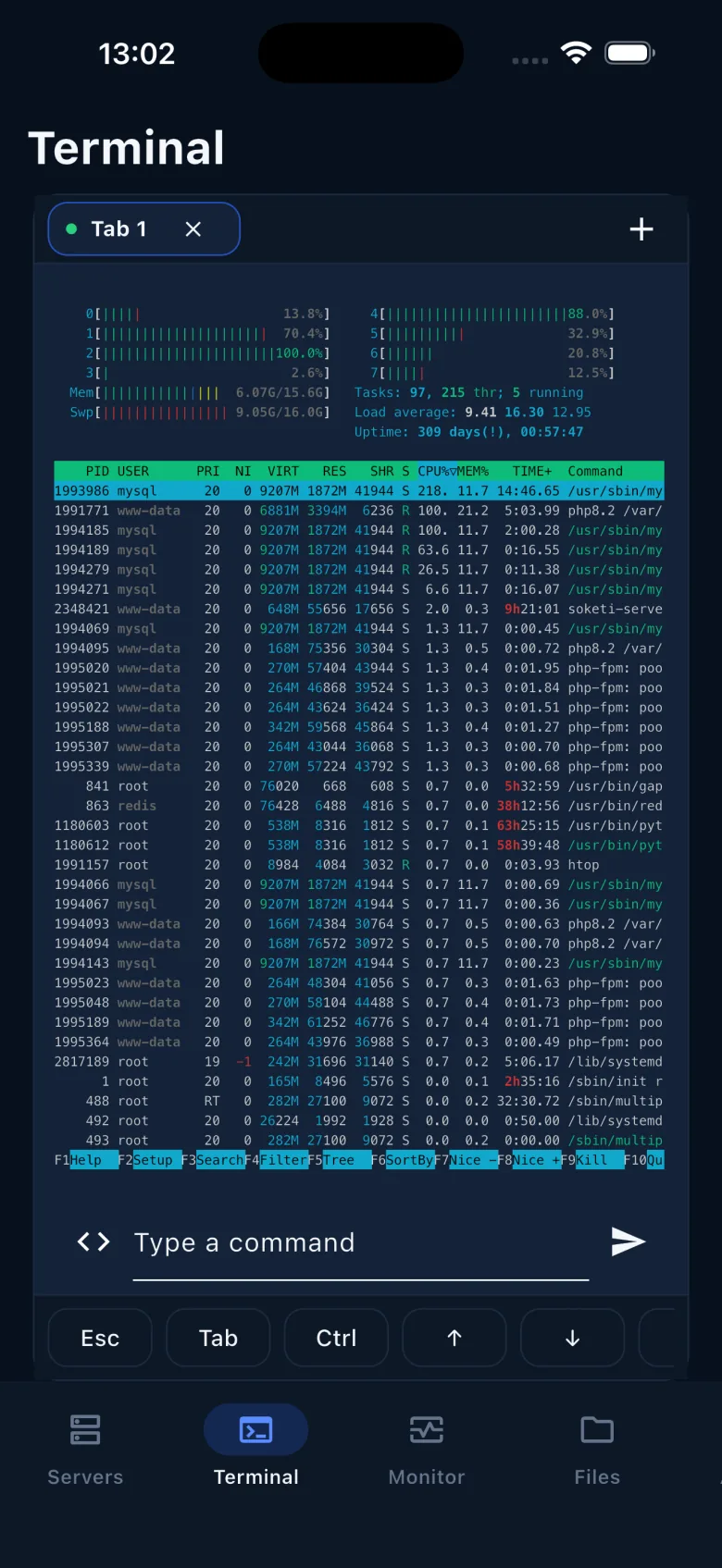
The useful cases are not dramatic, and that is exactly why they matter. They look like a load check after a deploy, a disk warning you want to confirm right away, or a process list before opening the laptop. Those are ordinary jobs, but they make up most of the day, and they tend to arrive in clusters instead of neat little blocks. When TermiShell handles them cleanly, it earns a place in the routine instead of staying on the edges of it. That is a better test than any polished demo, because it comes from the shape of real work rather than the shape of a pitch. If the app survives that test, I stop thinking of it as a backup.
When the phone view is enough
None of this means the app replaces a full desktop setup, and I would not want it to pretend otherwise. What I want on a phone is a narrow tool that keeps a narrow task from getting bloated or awkward, especially when the task itself is already annoying and deep observability still belongs elsewhere. TermiShell is more convincing when it accepts that boundary instead of trying to hide it behind a shiny interface. The restraint is part of the appeal, because it suggests the product was built by people who understand where mobile works and where it does not. That honesty is worth more to me than a long list of features I will barely touch. I have seen too many apps fail by trying to do everything well and ending up doing nothing cleanly.
I keep coming back to the same question: would I reach for this when the day is already messy and I do not have much patience left? If the answer is yes, the app has done enough to matter. TermiShell usually passes that test because it does not ask for a lot of ceremony before the work starts, which is exactly what I want in a small mobile tool, especially when I want the first answer fast. That matters when you are at odd hours and you still need to finish something without turning it into a bigger project, whether the job starts with disk usage or something even smaller. I value that more than a long list of features I am unlikely to use, because the features I ignore are just baggage. A good mobile tool should feel like something you can trust without babysitting it.
Where it stops being enough
In practice, this means the phone can handle the small ugly things that show up at the wrong time and refuse to wait for better conditions. A disk warning you want to confirm right away, a process list before opening the laptop, or one remote fix is often enough to keep a problem from growing teeth. That is not glamorous, and nobody is going to write a product keynote around it. It is just useful, and sometimes that is the whole point of a product like this. The more often a tool helps with these small jobs, the less you think about it in the first place, which is usually a good sign even when full dashboard work is easier on a larger screen. If it starts feeling invisible in the right way, it has probably earned its keep.
There are still things I would leave for a laptop, and I would say that without hesitation. Heavy editing, long debugging sessions, and anything that needs a lot of screen space are still better somewhere else, and pretending otherwise does not help anybody, especially when a mobile view should not pretend to be the whole story. That does not make TermiShell weaker; it makes it more honest about the kind of work it is built for. A phone tool should know where to stop, because that boundary keeps the product from drifting into a fake version of a desktop app. I prefer that kind of clarity to an app that promises too much and leaves me cleaning up the mismatch later. The limit is part of the design, not a failure of it.
Why it is worth keeping
That is why this kind of app keeps making sense, even when the market gets loud and full of bigger claims. It shrinks the gap between noticing a problem and doing something about it, which is usually what matters in the middle of a real day. It also keeps the experience human-sized, which is a phrase vendors use less often than they should because it is not as flashy as scale talk. If the app can stay out of the way and still let me finish the job, I will keep it around without thinking too hard about it, because the first call is often enough. That is the whole argument, and it is enough for most of the use cases these titles point to. Honestly, that is enough for me.
The nicer surprise is that the app stays useful after the first week, which is where a lot of mobile tools get stale. Once the novelty is gone, the only thing left is whether it still saves time. TermiShell tends to do that when quick health reads comes back around in the middle of a normal day and you do not want to make it a bigger thing. The point is not that it replaces every other tool in the stack; the point is that it keeps a health check from becoming a whole detour. That is a better promise than most apps make. I think that is the part people remember after the launch noise has faded.